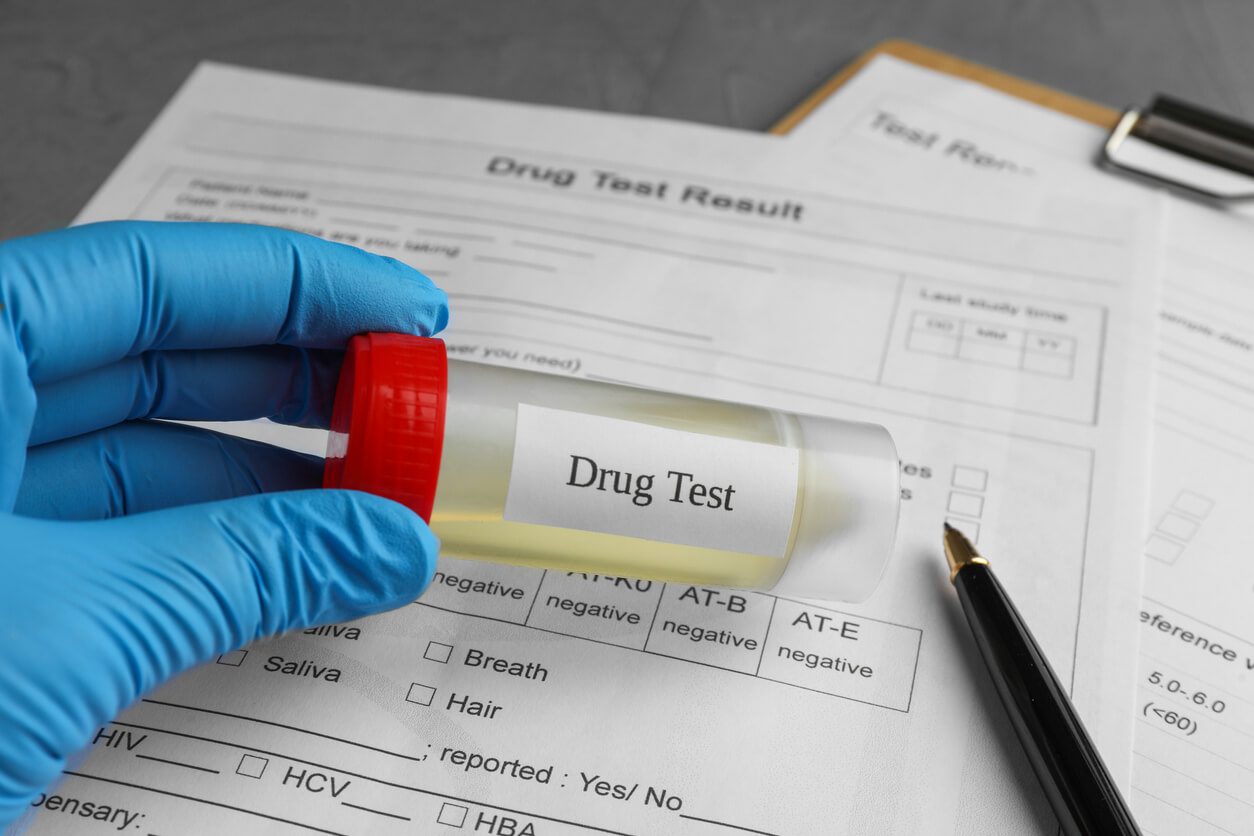
DOT drug testing follows strict federal rules under 49 CFR Part 40 and applies to safety-sensitive transportation workers. Non-DOT drug testing is more flexible and governed by employer policies and state laws. Both programs serve a critical role in drug testing and employment safety, but they differ significantly in specimen types, substances tested, and testing frequency.
In short,
- Two distinct frameworks. DOT drug testing is federally mandated with strict protocols, while non-DOT testing gives employers more flexibility in how they screen their workforce.
- Positivity rates remain high. According to the 2025 Quest Diagnostics Drug Testing Index, the combined U.S. workforce drug positivity rate remains at 4.4%.
- Fentanyl is emerging as a serious workplace concern. Random drug test fentanyl positivity rates are 707% higher than pre-employment rates, underscoring the need for robust ongoing drug testing programs.
Drug testing and employment go hand in hand for millions of American workers and employers. But not all workplace drug tests follow the same rules. Whether a company is subject to federal Department of Transportation (DOT) regulations or operates under its own policies, understanding the difference between DOT and non-DOT drug testing is essential for workplace safety and legal compliance.
Why Does the Difference Between DOT and Non-DOT Drug Testing Matter?
Drug testing and employment decisions affect real people. Choosing the wrong program, or failing to follow the correct rules, can result in federal fines, unsafe working conditions, or legal liability under state law.
For businesses in regulated industries like transportation, aviation, or pipeline operations, non-compliance with DOT rules carries serious consequences. For employers in other industries, understanding non-DOT options allows for a more tailored, cost-effective screening program.
What Is DOT Drug Testing, and Who Must Follow These Rules?
DOT drug testing is a federally mandated screening program governed by Title 49 of the Code of Federal Regulations (CFR), Part 40 (49 CFR Part 40). The U.S. Department of Transportation requires this type of drug testing and employment screening for workers in safety-sensitive positions across regulated industries.
Covered employees include:
- Commercial truck drivers (regulated by the Federal Motor Carrier Safety Administration, or FMCSA)
- Airline pilots and aviation workers (regulated by the Federal Aviation Administration, or FAA)
- Railroad workers (regulated by the Federal Railroad Administration, or FRA)
- Pipeline workers (regulated by the Pipeline and Hazardous Materials Safety Administration, or PHMSA)
- Transit workers (regulated by the Federal Transit Administration, or FTA)
- Coast Guard-regulated mariners
What Drugs Does a DOT Drug Test Screen For?
A standard DOT drug test screens for five categories of substances, often called a “5-panel” test. These include:
- Marijuana (THC metabolites)
- Cocaine metabolites
- Amphetamines, including methamphetamine and MDMA
- Opioids, including codeine, morphine, and heroin metabolites
- Phencyclidine (PCP)
Notably, DOT drug testing does not currently screen for fentanyl as part of its required panel, though this is changing. The Department of Health and Human Services (HHS) added fentanyl to the Federal Drug-Free Workplace Program panel effective July 7, 2025.
How Often Must DOT-Regulated Employers Test Employees?
DOT agencies require drug testing and employment screening to occur at specific times and frequencies. Covered employers must conduct:
- Pre-employment testing. Required before a new employee begins safety-sensitive duties.
- Random testing. Unannounced and conducted throughout the year. The FMCSA and FAA set their own required annual rates, with a minimum DOT target rate of at least 25%.
- Post-accident testing. Required after crashes involving injury, fatality, or vehicle damage requiring towing.
- Reasonable suspicion testing. Triggered when a trained supervisor observes signs of impairment.
- Return-to-duty testing. Required when an employee returns to safety-sensitive duties after a positive result.
- Follow-up testing. Unannounced tests that continue after an employee completes the return-to-duty process.
Every DOT drug test must use a urine specimen. No other specimen type is permitted under federal DOT rules. Additionally, the collected specimen must be split into two containers — so that if the first produces a non-negative result, the second can be tested for confirmation.
What Is Non-DOT Drug Testing, and How Does It Work?
Non-DOT drug testing refers to any workplace screening program that does not fall under federal DOT regulations. These programs are governed by employer policies, state laws, and sometimes industry-specific guidelines.
Non-DOT programs offer significantly more flexibility. Employers can customize what substances they test for, how often they test, and what specimen type they collect. That said, employers must still comply with applicable state and local laws, which vary widely.
What Substances Can Non-DOT Programs Test For?
Non-DOT testing programs can screen for a broader range of substances beyond the standard 5-panel test. Employers may add:
- Benzodiazepines, such as diazepam (Valium), alprazolam (Xanax), and clonazepam (Klonopin)
- Barbiturates
- Methadone
- Fentanyl (already available in non-DOT lab-based testing panels)
- Propoxyphene
- MDMA (ecstasy), if not already included in an amphetamine panel
This flexibility allows employers to tailor screening to the specific risk profile of their workforce and industry.
What Specimen Types Are Allowed in Non-DOT Testing?
Unlike DOT programs, non-DOT employers are not limited to urine specimens. Acceptable specimen types for non-DOT drug testing include:
- The most common and widely used specimen type.
- Useful for detecting recent drug use, particularly in post-accident or reasonable suspicion scenarios.
- Provides a longer detection window, typically up to 90 days, and is harder to adulterate than urine.
Non-DOT programs may also use rapid-result testing devices, which produce presumptive results on-site before confirmation at a laboratory. DOT programs do not permit rapid-result tests.
What Are the Key Differences Between DOT and Non-DOT Drug Tests?
Here is a clear side-by-side summary of how the two programs differ:
- Specimen type. DOT requires urine only. Non-DOT allows urine, saliva, or hair.
- Substances tested. DOT screens for five drugs. Non-DOT can screen for additional substances.
- Split specimens. DOT requires split-specimen collection. Non-DOT does not.
- Random testing. DOT mandates random testing at federally defined rates. Non-DOT random testing is optional.
- Rapid testing. DOT prohibits rapid-result devices. Non-DOT programs may use them.
- Observed collection. DOT observed collection is required only in specific circumstances. Non-DOT has more flexibility.
- State law compliance. DOT programs follow federal rules uniformly. Non-DOT programs must also comply with varying state and local regulations.
What Do Recent Studies Say About Drug Testing and Employment?
The data on workplace drug use is sobering and reinforces why consistent drug testing and employment screening programs matter.
The 2025 Quest Diagnostics Drug Testing Index, an analysis of more than 8 million drug tests, found that the combined U.S. workforce urine drug positivity rate was 4.4% in 2024. That rate has remained at or above 4% for over a decade.
Among federally mandated, safety-sensitive workers, those subject to DOT drug testing, the for-cause positivity rate in 2024 was 12.6%, compared to 33.1% in the general workforce. This gap strongly suggests that regular, structured testing programs deter drug use.
The same 2025 report revealed a particularly alarming trend around fentanyl. Fentanyl positivity in random drug tests was 707% higher than in pre-employment tests (1.13% versus 0.14%). This means some workers are passing initial pre-employment screens and then beginning to use fentanyl after they have been hired.
Over five years, fentanyl positivity in random testing has been 400% higher than in pre-employment testing. Additionally, 60% of fentanyl-positive specimens in 2024 were also positive for at least one other drug, making this a compounding safety risk.
How Do State Laws Affect Non-DOT Drug Testing Programs?
State law plays a major role in non-DOT drug testing and employment decisions. Employers must understand the rules in their state before implementing or modifying a screening program.
Some states restrict pre-employment cannabis testing. Pennsylvania, for example, prohibits employers from requiring pre-employment marijuana tests unless the position falls under specific exceptions, such as federal grant requirements or state safety regulations. Arizona protects medical marijuana patients from adverse employment action, unless the employee was impaired or possessed the drug during work hours.
Colorado, where WorkPartners Occupational Health operates in Grand Junction, has its own evolving marijuana laws that employers must consider when designing non-DOT programs. Employers in Colorado should consult with an occupational health provider to ensure their programs remain compliant with both state law and their own workplace safety policies.
Frequently Asked Questions (FAQ)
Whether you’re entering a safety-sensitive role or taking a standard pre-employment screening, knowing what to expect during your screening ensures a smooth process. Here are our most frequently asked questions regarding drug testing and employment.
What is the difference between a DOT drug test and a non-DOT drug test?
A DOT drug test follows strict federal rules under 49 CFR Part 40 and applies to safety-sensitive workers in federally regulated industries. Non-DOT drug tests are governed by employer policies and state law, and they offer more flexibility in specimen types, substances tested, and testing frequency.
Who is required to undergo DOT drug testing?
DOT drug testing applies to employees in safety-sensitive positions within federally regulated transportation industries. This includes commercial truck drivers, airline pilots, railroad workers, pipeline operators, transit workers, and Coast Guard-regulated mariners.
Can non-DOT employers test for fentanyl?
Yes. Non-DOT employers can include fentanyl in their drug testing panels today, as this substance is available through lab-based non-DOT testing programs. DOT-regulated employers must wait for the final 49 CFR Part 40 rule, which has been proposed but not yet finalized as of late 2025, before adding fentanyl to their required panels.
Does a non-DOT employer have to do random drug testing?
No. Random drug testing is not required under non-DOT programs. Employers who are not subject to DOT regulations may choose to conduct random, post-accident, pre-employment, or reasonable suspicion testing — or any combination — based on their own policies and applicable state law.
What happens if a DOT-covered employer does not follow the required testing rules?
Non-compliance with DOT drug testing regulations can result in federal fines, penalties from the applicable DOT agency, and increased liability in the event of a workplace accident. Employers should work with a qualified occupational health provider to ensure their programs meet all requirements under 49 CFR Part 40.
How does marijuana legalization affect workplace drug testing?
Marijuana legalization affects non-DOT testing more than DOT testing. Under federal DOT rules, marijuana remains a prohibited substance regardless of state law. Non-DOT employers must review their state’s regulations, as some states limit the ability to take adverse action based solely on a positive marijuana result.
How Can WorkPartners Occupational Health Help with Drug Testing and Employment in Grand Junction, CO?
Drug testing and employment compliance should not be guesswork. WorkPartners Occupational Health provides both DOT-compliant and non-DOT drug and alcohol testing services for employers across the region.
WorkPartners Occupational Health understands that every employer’s needs are different. A commercial trucking company with CDL drivers requires a rigorous DOT-compliant program built around 49 CFR Part 40. A local contractor or office-based business may benefit from a flexible non-DOT program tailored to its specific workforce and industry risks.
Contact WorkPartners Occupational Health at (970) 241-5585 or use our appointment form to learn more about building a drug testing program that protects your workforce and meets your compliance obligations.